LAYERED INTELLIGENCE · INDUSTRY & MARITIME APPLICATIONS
From observation to maritime decisions
Open a record for its evidence, collection layers and briefing PDF. Reviewed assessments add cited conclusions on the companies, services and access conditions that matter at sea.
Which announced capabilities are demonstrably available to maritime users, on what terms and for which operational decisions?
Baseline · Funding, contracts, launch, commissioning and measured service delivery are separate milestones. Sovereign capacity does not imply commercial access.
Decision affected · Collection planning, supplier qualification and service adoption.
Evidence needed & what would change the judgment
Counterparty or grant record, acceptance and dated demonstrations.
Area-specific acquisition, processing and delivery performance.
Licensing, tasking access, validation results and contrary evidence.
Accepted service delivery, a published independent benchmark or an evidenced access constraint would change maturity or availability judgments.
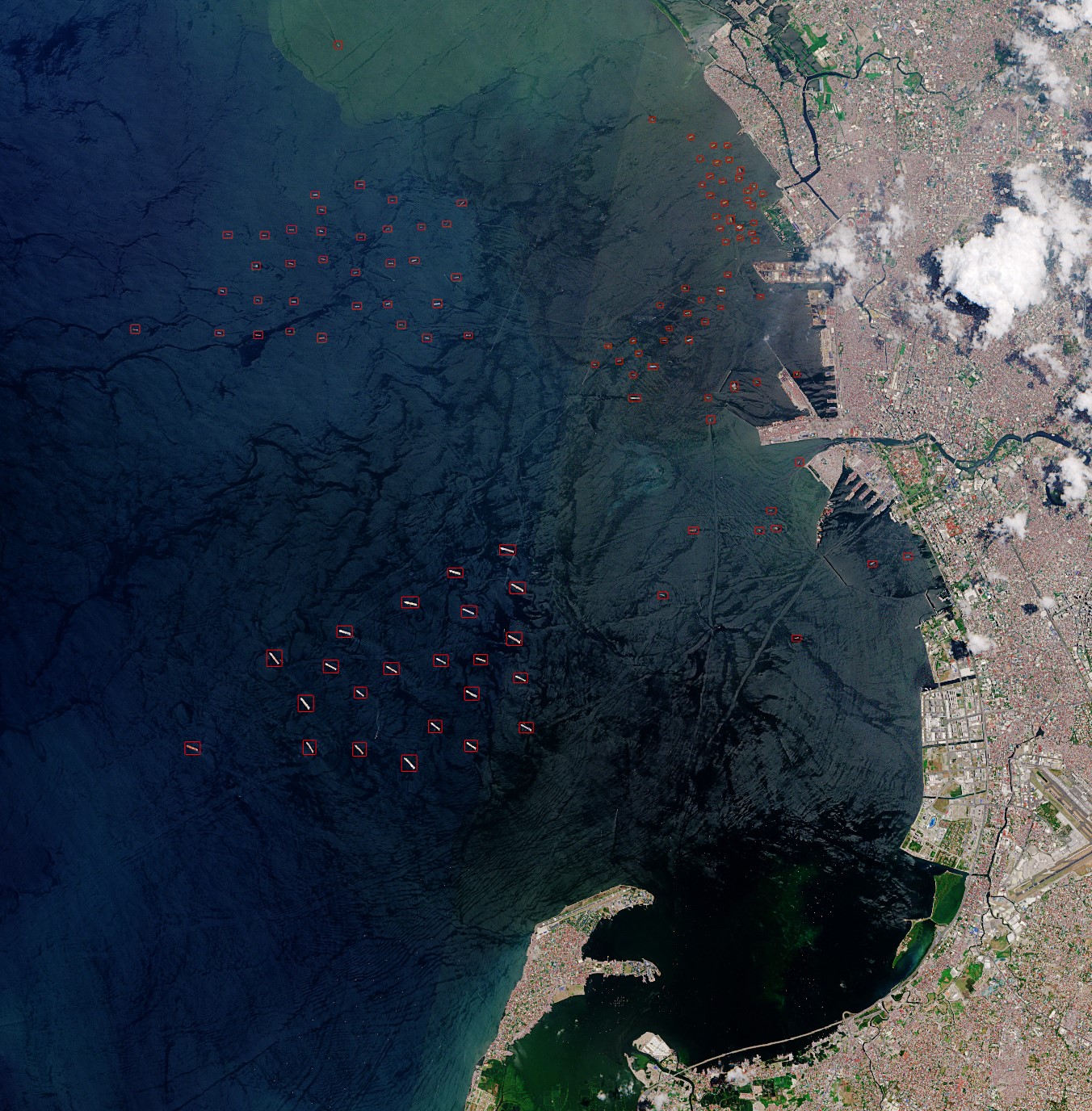
Historical context: a Sentinel-2 image illustrating vessel detection, published by ESA on 4 September 2020. Not evidence of a current corporate service.
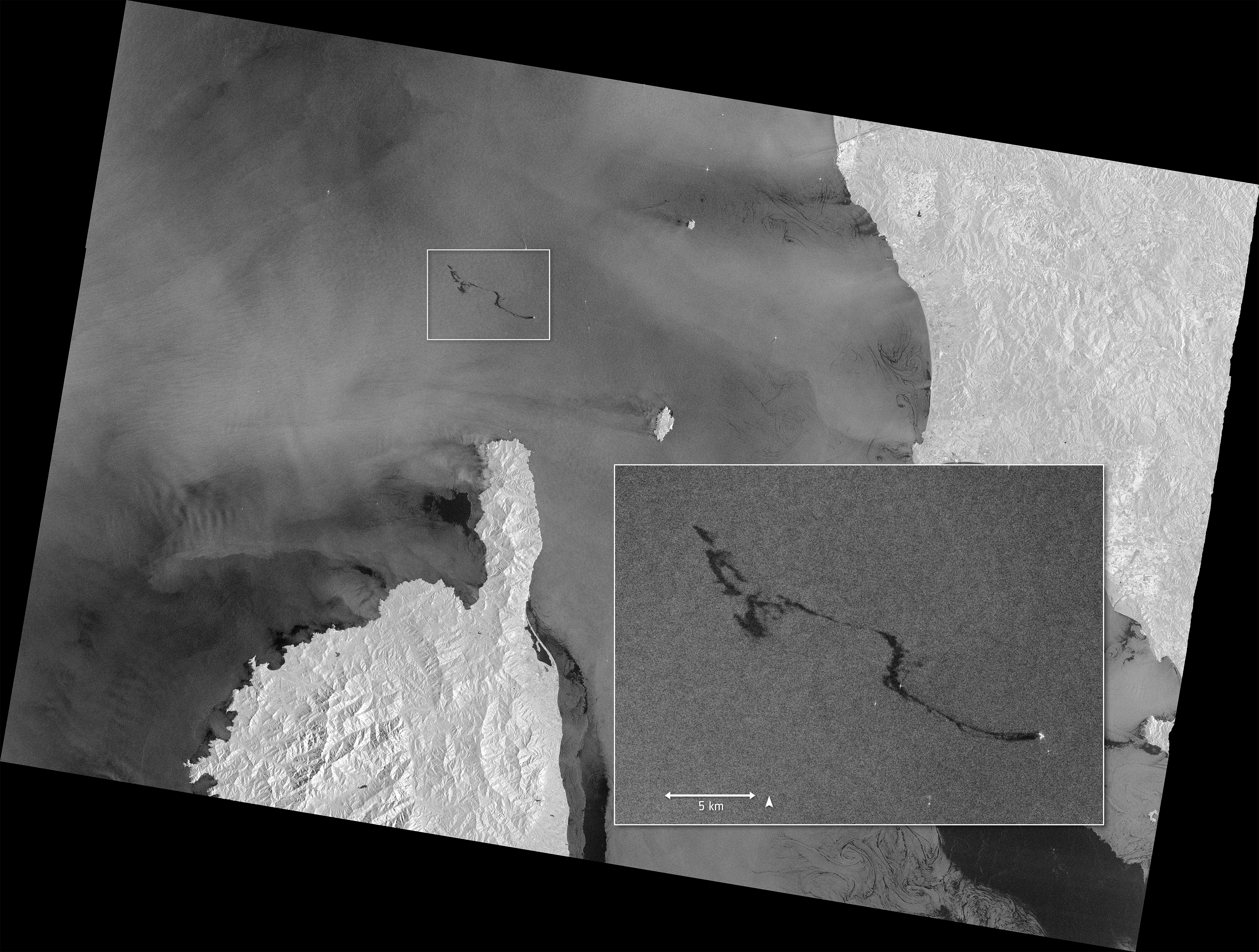
Historical context: Sentinel-1A observation north of Corsica, acquired 8 October 2018 at 05:28 GMT after a ship collision. Other dark areas can be calm water.
Official Maritime Sentry release notes dated 5 October describe SAR and RF collection requests in the application and API. This documents a software capability change; acquisition success, source availability and delivered latency remain separate evidence requirements.
Unseenlabs reports the deployment of Gen 1 BRO-23 and Gen 2 BRO-32 on 1 October, with maritime RF monitoring remaining an intended application. Satellite launch and commissioning are separate milestones; mission success alone does not establish current coverage or analytical delivery performance.
ICEYE reports ESA selection of ARISE for an architecture study of a future European governmental Earth observation service. The source includes sea among the relevant domains. A design-study award does not establish funded deployment, maritime coverage or operational service availability.
KSAT describes an evaluation of PierSight data for Vake. Its announcement places the first commercial Varuna 2.0 launch in 2027 and describes a planned constellation. This is an exploratory integration, not confirmation of operational coverage.
Oman’s transport ministry described containment and salvage preparations near Al Qibliyah in Dhofar. Later public records document emergency coordination, satellite observation and salvage activity in September; they do not establish the outcome as of today.
Unseenlabs reports the launch of BRO-31 and an expansion of RF sensing beyond its maritime focus. Launch establishes a mission milestone; commissioning, available coverage and delivered maritime results require follow-up.
KSAT announces Horizon Europe funding for POSEIDON, a project intended to improve radar and optical observation of maritime pollution. Research funding does not establish operational detection performance.
KSAT describes Vake as combining optical, radar and radiofrequency inputs for maritime awareness. Service performance is a company claim; coverage and latency for a particular area require separate validation.
Announcements retain issuer attribution. Planned constellations, launches, commissioning and measured service outcomes are separate milestones. New intelligence judgments pass through research and human editorial review.
Companies, agencies & collection coverage
Collection targets below are a research directory. Only the reader checks listed separately indicate automatic retrieval; a directory link is not a connected feed or a verified capability.
Bounded newsroom discovery and maritime-filtered ESA RSS. Web research extends coverage beyond these readers. A successful check can contain no maritime records.



 Source image · ICEYE
 Source image · KSAT