
Human editorial review before publication · Member of the Intelligence.Navy Maritime Intelligence Team · 13 Oct 2026 · 20:48 UTC. Incident verification remains separate.
Research context & editorial review- Original source published
- 13 Oct 2026 · 08:15 UTC
- Analysis reviewed
- 13 Oct 2026 · 20:48 UTC
- Human review
- 13 Oct 2026 · 20:48 UTC
- Added to portal
- 13 Oct 2026 · 08:02 UTC
- Source check
- 13 Oct 2026 · 16:38 UTC
External source reporting used in this assessment
Key judgment
The IRGC warning that AIS-off transits may be treated as hostile materially changes voyage-risk planning in Hormuz because IMO guidance permits a master to switch AIS off when continued transmission would compromise ship safety or security, while MARAD simultaneously warns of GNSS interference and advises coordinated routing. The evidence does not establish that the unnamed ships cited by Iran were deliberately dark, that AIS state caused the reported attacks, or that transmitting AIS assures safe passage.
Iranian state media attributed to the IRGC Navy an 11 October warning that AIS-off or navigation-silent Hormuz transits could be treated as hostile.
IMO guidance permits a master to switch AIS off when continued transmission would compromise safety or security, subject to reporting and logging where applicable and prompt restart after the danger passes.
MARAD's active advisory treats route coordination, VHF reporting and independent position cross-checks as necessary controls in the degraded Hormuz navigation environment.
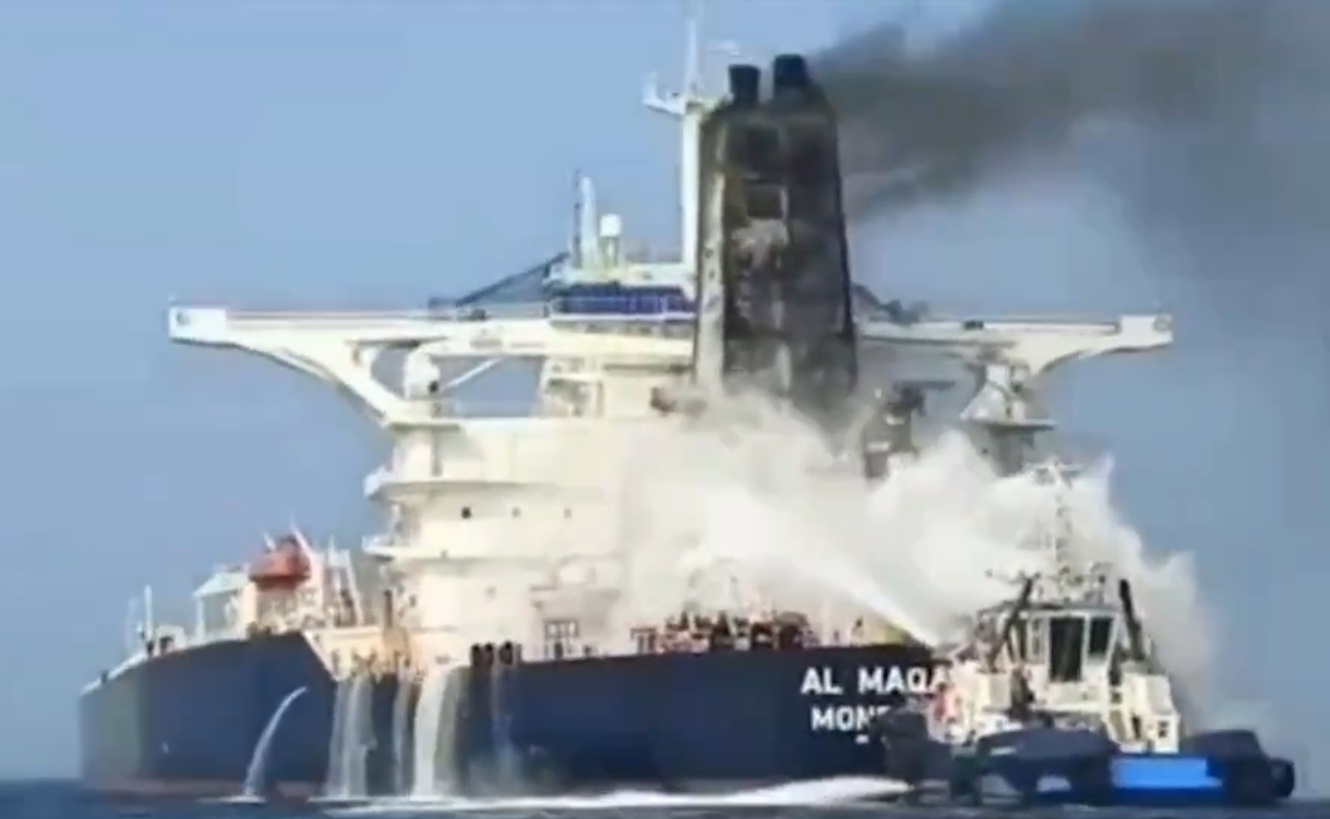 SOURCE PHOTOGRAPH
Image from the source publication.
What we learned
The source reports the warning but does not resolve the operational contradiction it creates. The dated follow-up shows that the statement was carried by Iranian state media on 11 October, that IMO's standing AIS guidance contains a safety exception with logging and reporting duties, and that MARAD's active advisory directs U.S.-flagged ships toward coordinated voyage planning and independent navigation cross-checks. IMO's confirmed-incident list, updated through 12 October, does not yet identify the newly reported 11 October cases. This changes the assessment from a generic warning about 'going dark' to a documented conflict between emission security, navigational integrity and competing authorities.
Maritime implication
Operators should not treat AIS-on or AIS-off as a standalone protective measure. The practical control is a flag- and company-approved voyage plan that records the master's AIS decision, maintains VHF and reporting links, cross-checks position independently of GNSS, and preserves a contemporaneous evidence trail. Intelligence teams should distinguish deliberate AIS suppression from reception gaps, equipment failure or safety-driven shutdown before linking a vessel to an incident.
Chronology and authority
Reported · The IRGC warning was attributed to an 11 October statement; Splash published its account on 13 October. The IMO confirmed-incident register was updated through 12 October but had not yet named the new 11 October cases.[2][1][5]
Identity and attribution limits
Analytical inference · No available record supplies IMO numbers or technical logs for the vessels described by Iran. Related notices therefore remain context, not independent confirmation or identity matches.[1][2][5]
Confidence & evidence limits
MODERATE · The warning and the conflicting official guidance are well supported by dated indexed excerpts, but the original IRGC release was not independently retrieved, the Iranian account is carried through state media, and no vessel identities or technical AIS records were available for the claimed dark transits.
Evidence & analytical reasoning
Reported · Iranian state media attributed to the IRGC Navy an 11 October warning that AIS-off or navigation-silent Hormuz transits could be treated as hostile.[1][2]
Reported · IMO guidance permits a master to switch AIS off when continued transmission would compromise safety or security, subject to reporting and logging where applicable and prompt restart after the danger passes.[3]
Reported · MARAD's active advisory treats route coordination, VHF reporting and independent position cross-checks as necessary controls in the degraded Hormuz navigation environment.[4]
Analytical inference · The combination creates a real operational dilemma: emitting AIS may increase exposure in some threat models, while going silent may trigger hostile classification by Iran.[2][3][4]
Analytical inference · The current evidence cannot link the warning to named vessels or establish that deliberate AIS shutdown caused any reported 11 October strike.[1][2][5]
Next decision indicators
- A primary IRGC notice or navigational warning that defines the rule, area, effective time and enforcement threshold.
- Named ship identities and time-matched AIS, radar or VHF evidence for the 11 October cases.
- Updated IMO, UKMTO, flag-state or P&I guidance reconciling AIS operation with the new threat.
- Evidence of boarding, diversion, warning fire or attack explicitly tied to a documented AIS state.
- A sustained change in identified commercial crossings, insurer conditions or operator routing instructions.
Publication history · 3 captured versions
Loading captured versions…
Evidence & references
- [1] Iran threatens ships going dark in HormuzSource account
- [2] IRGC warns ships with navigation systems off after third tanker hits mine in HormuzCandidate linkage · unconfirmed
- [3] IMO Resolution A.1106(29): Revised guidelines for the onboard operational use of shipborne AISContext reference
- [4] MARAD Advisory 2026-011: Persian Gulf, Strait of Hormuz and Gulf of OmanContext reference
- [5] IMO Middle East highlighted confirmed incidentsCandidate linkage · unconfirmed
Evidence scope & unresolved questions
- The original IRGC statement was not independently retrieved; its wording and the mine account are available through attributed indexed excerpts.
- No IMO numbers, MMSIs, timestamps or receiver-quality data were available for the allegedly silent vessels.
- An apparent AIS gap can result from reception coverage, interference, equipment failure or a safety decision; it does not by itself prove deliberate concealment.
- The legal status and practical enforcement of Iran's claimed route rules remain contested and may differ by flag-state guidance.
AI-assisted research, followed by recorded human editorial approval. Approval is not independent verification of the incident.. AI-assisted synthesis with recorded human editorial review; event verification remains limited by the attached sources.
Iran threatens ships going dark in Hormuz: Indexed excerpt; live page content was not verified. Feed and indexed excerpt only; the complete article text and its underlying source documents were not retrieved.
IRGC warns ships with navigation systems off after third tanker hits mine in Hormuz: Indexed excerpt; live page content was not verified. State-media account and search excerpt; the page timed out on direct retrieval, the underlying IRGC statement was not independently obtained, and the mine claim is not treated as confirmed.
IMO Resolution A.1106(29): Revised guidelines for the onboard operational use of shipborne AIS: Indexed excerpt; live page content was not verified. Official PDF retrieved through indexed text; this is general IMO guidance, not incident-specific direction for the 11 October cases.
MARAD Advisory 2026-011: Persian Gulf, Strait of Hormuz and Gulf of Oman: Indexed excerpt; live page content was not verified. Official advisory applies specifically to U.S.-flagged vessels and does not determine the legal or operational position of other flags.
IMO Middle East highlighted confirmed incidents: Indexed excerpt; live page content was not verified. The list is a selective confirmed-incident register and may update later; absence of an 11 October name is not evidence that no event occurred.