
Human editorial review before publication · Member of the Intelligence.Navy Maritime Intelligence Team · 16 Oct 2026 · 17:00 UTC. Incident verification remains separate.
Research context & editorial review- Original source published
- 15 Oct 2026 · 10:00 UTC
- Analysis reviewed
- 15 Oct 2026 · 11:13 UTC
- Human review
- 16 Oct 2026 · 17:00 UTC
- Added to portal
- 15 Oct 2026 · 10:14 UTC
- Source check
- 15 Oct 2026 · 10:14 UTC
External source reporting used in this assessment
Splash 247 · Germany puts $448m behind 47-point green shipping plan
Key judgment
The 14 October cabinet decision turns NAPS into an adopted implementation framework, but does not establish an additional €400m on top of previously announced support. The same budget title and 2026–2029 envelope appeared in July, and inland-shipping calls followed in August. The actionable change is the framework for coordinating vessels, ports and energy—not an automatic new allocation to every shipowner. [G2, G3, G4, G5, G6]
Cabinet adoption occurred on 14 October, before the 15 October article.
The €400m KTF envelope for 2026–2029 was already publicly described on 17 July.
Inland calls announced in August predate NAPS adoption and have distinct scopes and ceilings.
A maritime credit fund and leasing models are examined in the plan, rather than established there as available financing products.
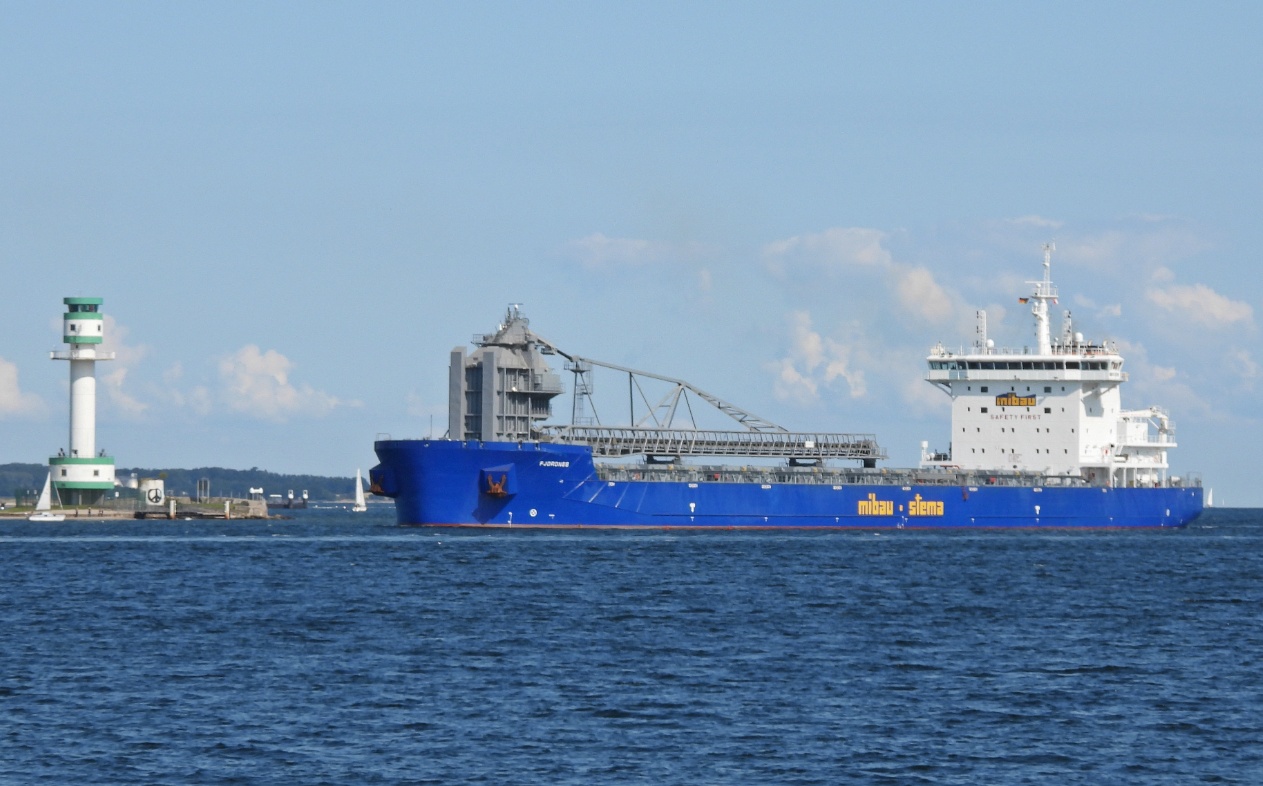 SOURCE PHOTOGRAPH
Image from the source publication.
What we learned
The funding chronology changes the commercial reading of the headline. Some support already had programme-specific calls before NAPS was adopted, while the plan still treats a maritime credit fund and leasing solutions as options to examine. Its proposed coastal-shipping support prioritises SMEs mainly in domestic service. The source-only portal record did not distinguish these different stages, eligible markets or the risk of counting the same funding envelope twice. [G1, G3, G4, G5, G6]
Maritime implication
Operators should match a vessel and route to the relevant call rather than treat the national plan as a grant offer. A retrofit case needs remaining vessel life, yard availability and an affordable energy-supply arrangement; a corridor needs ship and shoreside readiness together. Equipment suppliers and ports should seek named project partners and published award/commissioning milestones before treating policy support as contracted demand. [G3, G5, G6, G7]
Budget backing, calls and awards are different milestones
Analytical inference · March's climate programme already anticipated NAPS and implementation of some measures. July named the €400m multi-year envelope; August introduced distinct inland funding calls. October's adoption consolidates an agenda that was already partly under implementation. The amounts should not be added together as separate new spending merely because they appear in separate announcements. [G8, G4, G5, G6, G2][8][4][5][6][2]
Analytical inference · The corridor call and the regional-traffic call address different operating cases. Their announced ceilings establish prospective programme scale, not recipient demand, disbursement or delivered clean-vessel capacity. The ministry's published 19 October date concerns line 2; it should not be transferred to the other call or to all 47 measures. [G5, G6][5][6]
A supported retrofit still needs a bankable operating case
Analytical inference · The plan differentiates grant policy from financing ideas still to be examined. It also makes retrofit economics depend on remaining vessel life and seeks a yard-capacity assessment. Treating these as a ready credit facility or booked conversion slots would skip implementation steps. [G3][3]
Analytical inference · For a small coastal operator, domestic-service priorities may be relevant, but they are not a final eligibility decision for a particular ship. The investment sequence should preserve a viable route, energy cost and supply terms, financing and a workable yard slot. An older hull with little remaining commercial life may fail that test even with technical eligibility. [G3, G7][3][7]
Ports and fuel supply determine whether fleet spending becomes a service
Analytical inference · The inland-corridor call supports both vessels and associated supply infrastructure. This links two investment decisions that can otherwise strand one another: a converted vessel needs energy at usable locations, and a new supply facility needs dependable vessel demand. Joint route-level commitments are therefore more informative than isolated equipment announcements. [G5][5]
Analytical inference · Stakeholders also identify the wider physical logistics chain as a condition of competitiveness. A low-emission ship does not itself establish reliable port access or hinterland delivery. For cargo users, the useful outcome measures are commissioned vessel/infrastructure compatibility, actual service availability and documented operating cost and emissions—not the number of policy measures. [G3, G7][3][7]
Business conclusions for maritime intelligence
Analytical inference · Supplier opportunity is programme- and project-specific: distinguish inland corridors, regional waterway services and coastal-fleet priorities before sizing an addressable order pipeline. Do not count call ceilings or the national envelope as contracts. [G3, G5, G6][3][5][6]
Analytical inference · Ports, shipowners and energy suppliers can reduce coordination risk by developing compatible route-level projects, but need verified demand, financing and commissioning commitments before assuming commercial operation. [G3, G5, G7][3][5][7]
Confidence & evidence limits
MODERATE · Dated government documents establish adoption, earlier budget communication and prior calls. The policy text itself identifies instruments still under examination. Evidence does not establish current disbursement, project uptake, emissions delivered or a closing of the alternative-fuel cost gap; industry statements provide stakeholder concerns, not independent outcome verification. [G2, G3, G4, G5, G6, G7]
Evidence & analytical reasoning
Reported · Cabinet adoption occurred on 14 October, before the 15 October article.[1][2]
Reported · The €400m KTF envelope for 2026–2029 was already publicly described on 17 July.[4]
Reported · Inland calls announced in August predate NAPS adoption and have distinct scopes and ceilings.[5][6]
Reported · A maritime credit fund and leasing models are examined in the plan, rather than established there as available financing products.[3]
Analytical inference · The October headline should not be booked as €400m additional to the earlier portfolio without budget evidence of an increment.[2][4][5][6]
Analytical inference · Service readiness requires coordinated vessel conversion, energy access and physical infrastructure; a grant allocation alone cannot establish reliable operation.[3][5][7]
Next decision indicators
- Any budget document demonstrating a genuine increment, distinguishing commitment authority, allocation and cash disbursement.
- Current BAV confirmation of line-2 deadline/status and the distinct inland-corridor call's terms.
- Published coastal-shipping eligibility rules and any operational credit/leasing facility with final conditions.
- Named awards and linked ship, port and energy-supply contracts with commissioning dates.
- Yard-capacity results and measured service availability, energy cost and emissions from funded operations.
- Outcomes of the announced 5 November 2026 implementation conference; do not treat the meeting itself as a funding launch.
Publication history · 1 captured version
Loading captured versions…
Evidence & references
- [1] Germany puts $448m behind 47-point green shipping planSource account
- [2] Wir bringen klimafreundliche Schifffahrt mit nationalem Aktionsplan voran — BMV, 14 October 2026Candidate linkage · unconfirmed
- [3] Nationaler Aktionsplan klimafreundliche Schifffahrt — October 2026Candidate linkage · unconfirmed
- [4] 125 Millionen Euro für klimafreundliche Binnenschifffahrt — BMV, 17 July 2026Context reference
- [5] 70 Millionen Euro für grüne Binnenschifffahrtskorridore — BMV, 10 August 2026Context reference
- [6] 14 Millionen Euro für emissionsfreie Binnenschiffe — BMV, 21 August 2026Context reference
- [7] Hamburger Schifffahrtsdialog — VDR, 16 September 2026Context reference
- [8] Klimaschutzprogramm 2026 — cabinet decision of 25 March 2026, measure V36Context reference
Evidence scope & unresolved questions
- No budget reconciliation or current uncommitted balance establishes an increment beyond the envelope already described in July.
- Current BAV call status/amendments were not verified because the linked endpoint returned 503; the ministry's 19 October date remains attributed.
- Final terms and launch dates for the examined credit/leasing instruments remain unestablished.
- Project awards, procurement orders, yard availability, fuel offtake and delivered operating results were not recovered.
- Public industry statements are advocacy, not independent performance confirmation. No direct interview or private human communication was available; HUMINT remains an intelligence gap.
AI-assisted research, followed by recorded human editorial approval. Approval is not independent verification of the incident.. AI-assisted synthesis with recorded human editorial review; event verification remains limited by the attached sources.
Germany puts $448m behind 47-point green shipping plan: Retained portal source record. Truncated feed abstract; publisher's full article was not retrieved.
Wir bringen klimafreundliche Schifffahrt mit nationalem Aktionsplan voran — BMV, 14 October 2026: Issuer announcement; budget backing is not evidence of awards, payments or completed projects.
Nationaler Aktionsplan klimafreundliche Schifffahrt — October 2026: 32-page policy document: objectives and proposed instruments are not grant awards, operating guarantees or measured performance.
125 Millionen Euro für klimafreundliche Binnenschifffahrt — BMV, 17 July 2026: Earlier announcement establishes the budget baseline; it does not provide the present uncommitted balance or demonstrate that every later announcement is additional.
70 Millionen Euro für grüne Binnenschifffahrtskorridore — BMV, 10 August 2026: Call ceiling, not awarded/disbursed money; current application status and any revised deadline were not established.
14 Millionen Euro für emissionsfreie Binnenschiffe — BMV, 21 August 2026: Deadline is the ministry's published date, not confirmation that the granting authority currently accepts applications. Linked BAV endpoint returned 503 during retrieval; eligibility, amendments and status need direct confirmation.
Hamburger Schifffahrtsdialog — VDR, 16 September 2026: Primary record of attributed public stakeholder positions. Predates cabinet adoption, contains advocacy and is not a project audit or HUMINT collected by this portal.
Klimaschutzprogramm 2026 — cabinet decision of 25 March 2026, measure V36: Earlier policy baseline; projections and intentions are not achieved emissions reductions.