
Human editorial review before publication · Member of the Intelligence.Navy Maritime Intelligence Team · 12 Oct 2026 · 20:18 UTC. Incident verification remains separate.
Research context & editorial review- Original source published
- 02 Oct 2026 · time not supplied
- Analysis reviewed
- 10 Oct 2026 · 10:02 UTC
- Human review
- 12 Oct 2026 · 20:18 UTC
- Added to portal
- 10 Oct 2026 · 07:48 UTC
- Source check
- 12 Oct 2026 · 20:36 UTC
External source reporting used in this assessment
Key judgment
Deployment is corroborated by the launch integrator; operational acceptance of the new RF capacity remains unverified. Maritime planners should require delivered observations before changing collection assumptions. [U1,U2,U3]
The integrator confirms these two named spacecraft on the 1 October mission.
Both generations require commissioning before operational missions under the published plan.
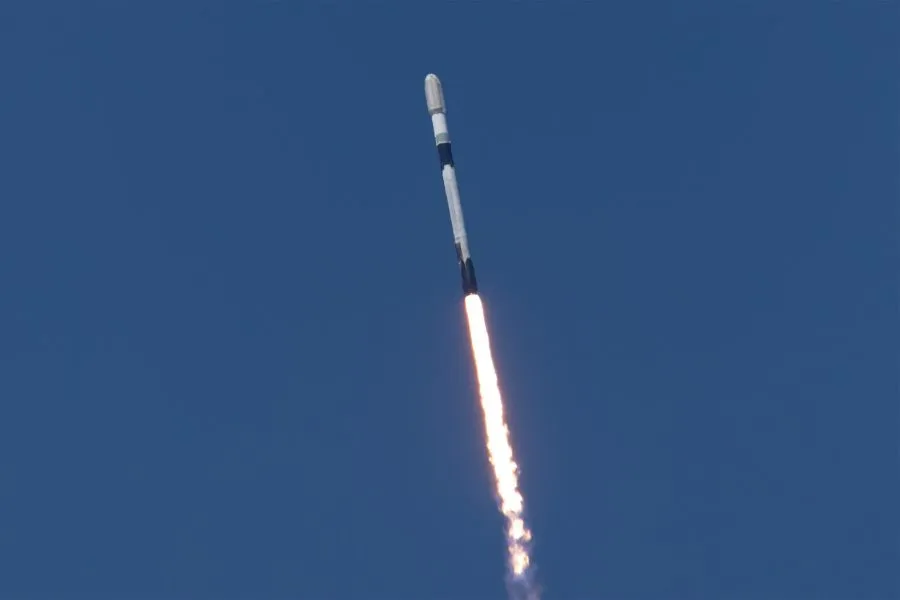 SOURCE PHOTOGRAPH
Image from the source publication.
What we learned
Beyond the archived launch summary, this research distinguishes complementary generations, finds a separate integrator confirmation and exposes conflicting public dates/counts. The sectoral draft already noted deployment; this adds spacecraft-specific acceptance and data-delivery tests. [U2,U3,U4,U6,U7]
Maritime implication
Use RF observations to cue corroborating imagery and vessel checks, with acquisition timestamps and position uncertainty. A wider emitter catalogue can improve collection choices; it does not establish hull identity or continuous offshore coverage. [U4,U5]
Sensor and observation
Reported · Gen 2 broadens emitter coverage while Gen 1 remains maritime-focused; this is complementary deployment.[4]
Fusion and identity
Analytical inference · Correlate emitter coordinates and timestamps with other observations; RF reception alone cannot establish the associated hull.[5]
Maritime application
Analytical inference · Navigation and communications emitters could enrich offshore cueing after acceptance; a non-emitting target still requires another sensor.[4]
Companies and value chain
Analytical inference · The supplier also offers analytical reports and visualisation. Maritime buyers can choose data integration or a packaged analysis workflow.[5]
Access and sovereignty
Analytical inference · Public/private customer service is offered; contracts must separately define export rights, tasking priority and sovereign control. Those terms were not retrieved.[5][6]
Conclusions and confidence
Analytical inference · Deployment advances maturity, but mission success and maritime delivery performance remain separate acceptance questions.[2][3]
Business conclusions for maritime intelligence
Analytical inference · An operator selling RF data and reports occupies several value-chain positions; integration terms should define product boundaries and reuse rights.[5]
Confidence & evidence limits
MODERATE · Integrator corroboration supports deployment. Capability descriptions remain operator statements; no dated acceptance or delivery measurements for these spacecraft were located. [U2,U3,U8]
Evidence & analytical reasoning
Reported · The integrator confirms these two named spacecraft on the 1 October mission.[3]
Reported · Both generations require commissioning before operational missions under the published plan.[2]
Analytical inference · Broader RF collection should be accepted against delivered emitter products, rather than satellite totals.[4][5][6][7]
Next decision indicators
- Dated commissioning completion for each spacecraft and first delivered maritime observation. [U2,U8]
- A timed trial separating acquisition opportunity, tasking, downlink, processing and delivery, with missed collections included. [U2,U5]
- RF/AIS/image matching with declared uncertainty, plus data export, licensing and tasking-priority terms. [U5]
Publication history · 5 captured versions
Loading captured versions…
Evidence & references
- [1] Unseenlabs: Successful Launch of BRO-23 and BRO-32Source account
- [2] Unseenlabs: pre-launch plan and commissioning sequenceContext reference
- [3] Exolaunch: Transporter-18 mission accountContext reference
- [4] Unseenlabs: Gen 2 technical descriptionContext reference
- [5] Unseenlabs: RF solutions and delivered productsContext reference
- [6] Unseenlabs: original successful-launch press release PDFContext reference
- [7] Unseenlabs: launch catalogueContext reference
- [8] Unseenlabs: current press centreContext reference
Evidence scope & unresolved questions
- No post-commissioning maritime collection product, geolocation-error distribution or delivery SLA for these spacecraft was retrieved. [U1,U8]
- Launch date and constellation totals conflict across issuer pages; a count is not an active-capacity inventory. [U6,U7]
- The Gen 2 band table repeats an interval for S and C; obtain a payload specification before quoting frequency limits. [U4]
AI-assisted research, followed by recorded human editorial approval. Approval is not independent verification of the incident.. AI-assisted synthesis with recorded human editorial review; event verification remains limited by the attached sources.
Unseenlabs: Successful Launch of BRO-23 and BRO-32: Operator announcement; no spacecraft acceptance certificate or measured delivery results.
Exolaunch: Transporter-18 mission account: A separate involved counterparty corroborates deployment; it does not validate RF performance.
Unseenlabs: Gen 2 technical description: Undated product page. Band-table ambiguity requires an authoritative payload specification; no GHz limits adopted here.
Unseenlabs: RF solutions and delivered products: Undated product description; no BRO-23/BRO-32-specific SLA, licensing or geolocation-error data.
Unseenlabs: original successful-launch press release PDF: Same issuer as U1; not independent corroboration or proof all counted spacecraft provide service.
Unseenlabs: launch catalogue: Undated catalogue; discrepancies are unreconciled, so no active-fleet count is inferred.
Unseenlabs: current press centre: A bounded public listing cannot establish that commissioning has not occurred.