
Human editorial review before publication · Member of the Intelligence.Navy Maritime Intelligence Team · 12 Oct 2026 · 20:18 UTC. Incident verification remains separate.
Research context & editorial review- Original source published
- 10 Oct 2026 · 19:16 UTC
- Analysis reviewed
- 10 Oct 2026 · 21:15 UTC
- Human review
- 12 Oct 2026 · 20:18 UTC
- Added to portal
- 10 Oct 2026 · 21:02 UTC
- Source check
- 10 Oct 2026 · 21:02 UTC
External source reporting used in this assessment
gCaptain · Tiny Drones Help Tackle Shell’s Million-Dollar Hurricane Problem
Key judgment
Shell has moved autonomous offshore inspection beyond a concept: JPT reports 44 successful drone-in-a-box flights from the Mars floating platform in April and an FAA waiver enabling self-authorized BVLOS operations under stated conditions. The current Hurricane Isaias sequence provides a real operational test—Shell shut in four producing assets and began redeploying personnel on 10 October—but neither Shell nor the regulator says drones were used or quantifies an earlier restart. The capability can shorten preliminary visual-assessment latency; it has not yet demonstrated a day of recovered production or replaced the wider post-hurricane inspection and restart chain.
Shell’s Mars team completed 44 offshore drone-in-a-box flights in April 2026, including a night operation, with successful landings reported by JPT.
JPT reports that Shell obtained an FAA waiver for self-authorized offshore BVLOS operations, but a matching primary FAA authorization record was not located in this research.
Shell shut in production at Mars, Ursa, Olympus and Vito during Isaias and began redeploying personnel to five assets on 10 October.
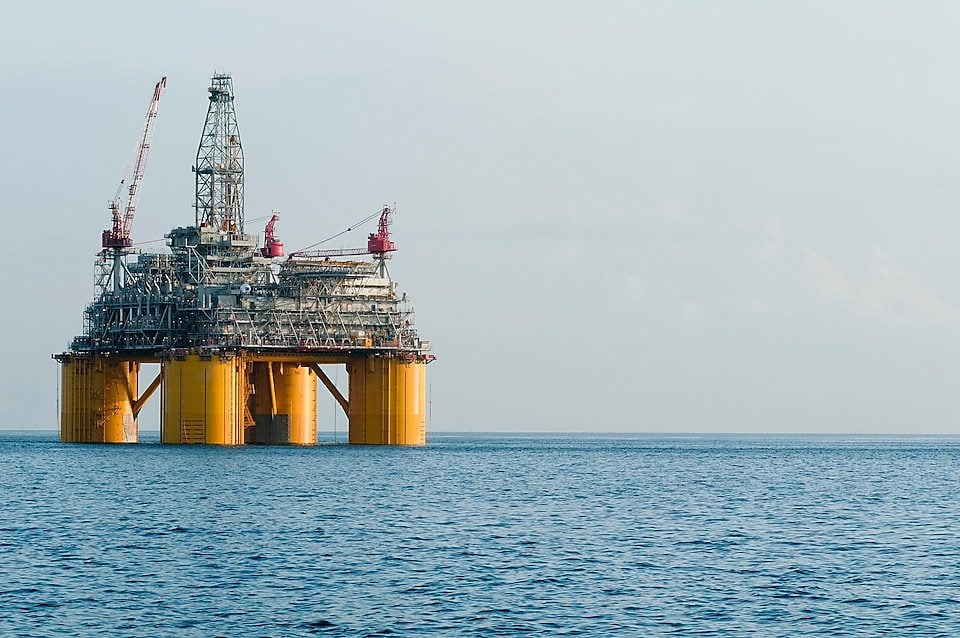 SOURCE PHOTOGRAPH
mars-b-project-gulf-of-mexico
What we learned
The source headline frames a million-dollar hurricane solution. Follow-up separates three stages: a completed offshore flight trial, regulatory permission reported by JPT, and a still-unproven production-recovery outcome. It also compares the marketing claim with Shell’s dated Isaias actions and the regulator’s requirement that facilities be inspected and standard checks completed before undamaged production returns.
Maritime implication
For offshore operators, docked drones could reduce helicopter exposure and provide earlier visual evidence after weather clears, improving the decision to remobilize crews. Their value must be measured across the full sequence—weather clearance, power and communications availability, drone launch, defect triage, any required close inspection, crew return and restart—not by flight success alone. During Isaias, the wider Gulf still had 68.76% of oil and 57.44% of gas production shut in on 10 October, so recovery timing remains operationally material.
Confidence & evidence limits
MODERATE · The April flight count, platform and workflow are described in detailed technical reporting, and Shell and MMA provide dated storm actions. However, the specific FAA authorization was not located in a primary FAA record, no post-Isaias drone sortie or inspection result is public, and no asset-level restart time or counterfactual day saved is available.
Evidence & analytical reasoning
Reported · Shell’s Mars team completed 44 offshore drone-in-a-box flights in April 2026, including a night operation, with successful landings reported by JPT.[2]
Reported · JPT reports that Shell obtained an FAA waiver for self-authorized offshore BVLOS operations, but a matching primary FAA authorization record was not located in this research.[2]
Reported · Shell shut in production at Mars, Ursa, Olympus and Vito during Isaias and began redeploying personnel to five assets on 10 October.[4][5]
Analytical inference · The current storm sequence does not yet demonstrate that drones shortened Shell’s restart because the public updates identify neither a drone sortie nor inspection and restart timestamps.[2][4][5]
Analytical inference · Autonomous visual inspection can advance the first evidence available after a storm, but production recovery still depends on power, communications, defect findings, required checks and crew mobilization.[2][3][6][7]
Analytical inference · The business case should be tested against measured end-to-end recovery time and avoided mobilizations, not the hypothetical value of one recovered production day.[1][2][5][6]
Next decision indicators
- A Shell post-Isaias report naming drone sorties, inspected assets and the decisions they supported.
- Timestamps from all-clear through drone launch, image delivery, crew remobilization and production restart.
- Asset count and deployment status for docked autonomous drones across Shell’s Gulf portfolio.
- A primary FAA record with waiver scope, conditions, approved operators and operating envelope.
- Measured false alarms, missed defects, aborted flights and availability under post-storm wind, power and communications conditions.
- Evidence that BSEE/MMA or facility integrity procedures accept drone outputs for defined post-hurricane checks.
Publication history · 1 captured version
Loading captured versions…
Evidence & references
- [1] Tiny Drones Help Tackle Shell’s Million-Dollar Hurricane ProblemSource account
- [2] JPT Exclusive: Shell Advances Drone Operations in the US GulfCandidate linkage · unconfirmed
- [3] From Ropes to Drones: Innovating Offshore InspectionsContext reference
- [4] Hurricane Isaias Update #3Candidate linkage · unconfirmed
- [5] Hurricane Isaias Update #4Candidate linkage · unconfirmed
- [6] MMA Monitors Gulf of America Oil and Gas Activities in Response to Hurricane IsaiasContext reference
- [7] Post-Hurricane Inspection and Reporting — NTL 2026-G02Context reference
Evidence scope & unresolved questions
- No primary FAA document confirming the exact waiver scope and conditions was located.
- The number of Shell Gulf assets with installed and storm-survivable drone docks is not public.
- No public Isaias drone sortie, imagery, defect-triage record or decision timestamp was found.
- Shell has not published asset-level restart times or a counterfactual showing production resumed earlier because of drones.
- Backup power, Starlink/5G availability, wind limits, glare, platform motion and night performance may constrain post-storm use.
- The regulatory and engineering checks that can be satisfied by remote imagery versus physical inspection are not specified publicly.
AI-assisted research, followed by recorded human editorial approval. Approval is not independent verification of the incident.. AI-assisted synthesis with recorded human editorial review; event verification remains limited by the attached sources.
Tiny Drones Help Tackle Shell’s Million-Dollar Hurricane Problem: Indexed excerpt; live page content was not verified. Only the feed excerpt was available; it gives no asset-level sortie, restart timestamp, regulatory acceptance or measured production recovery.
JPT Exclusive: Shell Advances Drone Operations in the US Gulf: Indexed excerpt; live page content was not verified. Detailed trade-journal reporting based partly on Shell interviews; flight results and waiver scope were not independently audited, and no post-hurricane restart performance is measured.
From Ropes to Drones: Innovating Offshore Inspections: Indexed excerpt; live page content was not verified. Corporate feature about inspection benefits; it does not validate autonomous post-storm operation or quantify hurricane restart time.
Hurricane Isaias Update #3: Indexed excerpt; live page content was not verified. Corporate operational update; it does not state whether autonomous drones were installed, available or used at the assets.
Hurricane Isaias Update #4: Indexed excerpt; live page content was not verified. The update gives no drone sortie, inspection result, restart time or causal attribution to the drone programme.
MMA Monitors Gulf of America Oil and Gas Activities in Response to Hurricane Isaias: Indexed excerpt; live page content was not verified. Aggregate operator reporting across the Gulf; it does not identify Shell-specific production, drone use or asset-level restart performance.
Post-Hurricane Inspection and Reporting — NTL 2026-G02: Indexed excerpt; live page content was not verified. The landing page establishes the inspection framework but does not say a drone survey alone satisfies every facility-specific check.